
After a spring storm rolls through the South Shore, most homeowners look for obvious damage: fallen limbs, split trunks, or trees already on the ground. But coastal storms often create a second category of problems that are harder to spot.
A tree may still be standing while roots have shifted in saturated soil or structural limbs have weakened high in the canopy. In coastal communities like Scituate and Duxbury, ocean wind and heavy spring weather often expose problems that were already developing beneath the surface—which is why post-storm inspections matter even when everything looks normal at first glance.
Key Takeaways
- The biggest spring storm risk isn’t the tree that falls; it’s the trees that almost did and are still standing on shifted root plates.
- Coastal Scituate and Duxbury properties face a compound risk of barrier-beach winds, salt spray, and sandy soils.
- Most homeowner-visible warning signs fall into three categories: root plate movement, trunk failure indicators, and canopy or limb instability.
- A clear severity ladder—monitor, schedule an assessment, or treat as an immediate hazard—should drive your next move.
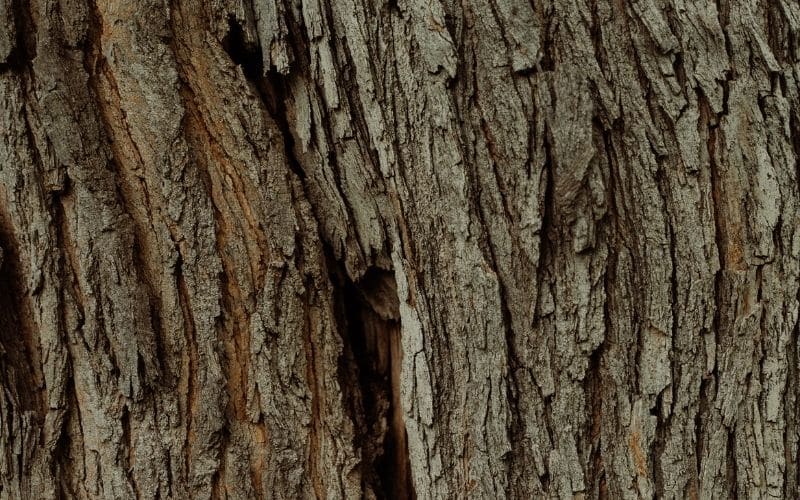
Vertical fissures and bark separation on a mature trunk are warning signs worth checking after a spring storm—and a reason to request an assessment from Top Notch Tree.
Why Do Spring Storms Often Reveal Hidden Tree Damage?
Spring storms often expose tree problems differently than winter storms because the ground is no longer frozen and stable. As soil thaws and becomes saturated from rain, roots lose some of the support they had during colder months, making trees more vulnerable to shifting, leaning, or structural stress during high winds.
That timing matters along the South Shore, where thawing soil, spring rain, and late-season coastal storms can overlap. Since most tree roots sit relatively close to the surface, it doesn’t take standing water or major flooding for stability to become compromised. In some cases, a tree may not fail during the storm itself, but the root system or canopy structure may already be weakened afterward.
Why Are Coastal Scituate and Duxbury Trees at Higher Risk?
Coastal Scituate and Duxbury properties have a stack of risk factors that inland trees don’t, such as:
- Barrier-beach geography that funnels nor’easter wind directly inland
- Sandy soils with weaker root anchorage
- Salt spray that quickly weakens evergreen canopies through the winter
Properties in Humarock, Sand Hills, Egypt Beach, Minot, and the streets behind Scituate Harbor sit directly in the path of onshore winds with little to break it. Powder Point, Snug Harbor, and the streets running across the bay in Duxbury all tell the same story, too, as they catch wind that has built across open water for miles. In those neighborhoods, a mature white pine feels every gust an inland tree never does.
Sandy coastal soils also provide weaker root anchorage than heavier clay or loam soils, especially once they become saturated. As moisture increases, the soil loses even more structural stability around the root system. Salt spray adds another layer of stress, too. Common species across our coastal Scituate and Duxbury landscapes are particularly sensitive to salt-laden wind.

Exposed roots and visible movement at the root flare often signal that a tree’s anchor has shifted—a critical check on South Shore coastal properties after a nor’easter.
What Does Hidden Storm Damage Look Like?
Most hidden storm damage shows up in three places a homeowner can safely check from the ground:
- The root flare
- The trunk
- The canopy
You don’t need a ladder or training to do this walk-through; you just need to know what you’re looking at.
Root Plate and Soil Movement
The ground around the trunk tells you whether the tree shifted in the storm:
- Cracks in the soil radiating outward from the trunk base.
- Soil that looks heaved up, “fluffy,” or raised on the windward side.
- An obvious increase in lean since before the storm.
- Exposed roots on the side opposite the wind direction.
Any of these means the root plate has moved.
Trunk Damage
Mid-trunk damage is where structural decay first shows up, including:
- Vertical cracks running up and down the trunk
- Bark separating in belt-like patterns from the underlying wood
- Mushrooms, conks, or bracket fungi at the base or on the trunk—not storm-caused, but a clear signal of active internal decay and a major reason to flag this tree now
- V-shaped unions where two trunks meet, especially with bark folded inward at the union
Canopy and Limb Warning Signs
Standing well back from the tree, look up and take note of:
- Hanging or partially broken limbs—classic “widowmakers”
- A large section of the canopy missing or torn away—broken off and carried by wind or flood water
- Branches that have visibly shifted angle since before the storm
A broken limb caught in another branch can drop without warning weeks later.
Why Salt Spray Damage Shows Up Weeks After a Coastal Storm
Salt spray damage from a coastal nor’easter usually doesn’t appear immediately, which is why many homeowners never connect the symptoms back to the storm itself.
During severe coastal weather, onshore wind carries fine salt mist deep into tree canopies. That salt settles onto needles and buds during winter, but the damage often doesn’t become visible until trees begin pushing new growth in spring.
Common signs include:
- Browning or scorched foliage
- Bud failure
- Damage concentrated on the ocean-facing side of the tree
- Healthier growth on the protected side
When damage is noticeably heavier on the seaward side, salt exposure is often part of the problem.
NOTE: Eastern white pine is one of the most commonly affected species along the South Shore, but Norway spruce, white spruce, eastern hemlock, and sugar maple can also struggle with repeated salt exposure. Over time, salt stress can reduce vigor, thin canopies, and leave trees less prepared for future storms.
What Should You Do After Finding Storm Damage on a Tree?
Once you spot storm-related warning signs, the next step is figuring out whether the tree needs monitoring, a professional inspection, or immediate attention.
Monitor and Re-Check
Some findings are worth watching but usually aren’t urgent, including:
- Minor canopy thinning or a few small dead branches
- Bark scuffs or scrapes on minor limbs
- Salt browning on seaward-side foliage with no other red flags
Take photos, monitor the tree, and re-check for worsening symptoms in 30 days.
Schedule a Professional Assessment
Some problems don’t necessarily mean the tree has to come down, but they should be evaluated by a Certified Arborist:
- Vertical trunk cracks, conks, or extensive bark separation
- Multiple medium-size hanging limbs in the canopy
- Salt damage combined with another red flag: lean, root cracks, or trunk damage
- More than about 30% of canopy loss
A tree risk assessment can help determine whether pruning or removal is the safest option.
Treat as an Immediate Hazard
Certain storm-related problems should be treated as urgent safety concerns:
- A 15-degree or greater lean that’s new since the storm
- Visible soil cracks or heaving at the root flare.
- A tree leaning toward a structure, driveway, or play area
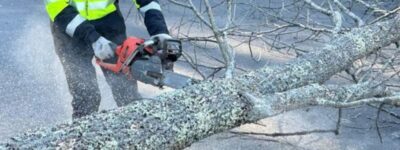
- A large limb or section of the trunk that’s broken or split but still attached — teetering and likely to come down on its own
Stay clear of the drop zone and call for 24/7 emergency tree service.
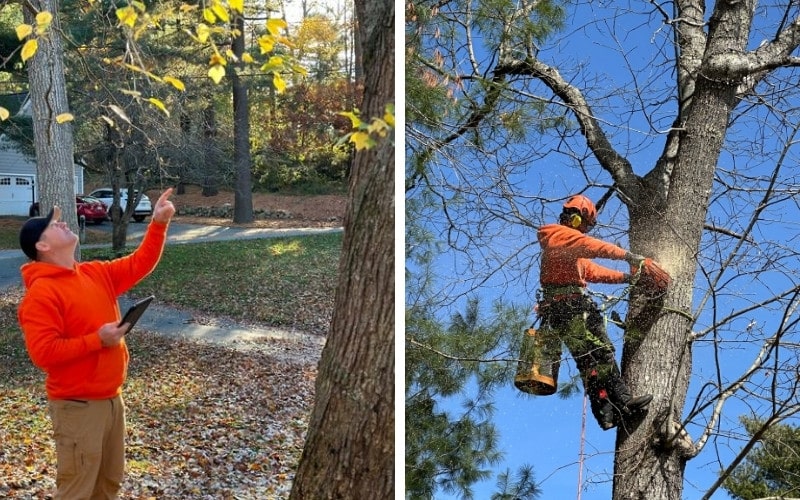
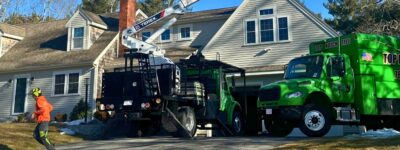
A free Top Notch Tree assessment determines whether a storm-impacted tree needs corrective pruning, cabling, or full removal—and the right plan to protect what’s nearby.
Frequently Asked Questions About Storm-Damaged Trees
How long after a spring storm should I inspect my trees?
Wait 24 hours, at least. Additional limbs frequently drop as canopy stress redistributes. Then, walk the property from a safe distance and check the root flares, trunks, and canopies, documenting anything new.
Can a leaning tree be saved after a storm?
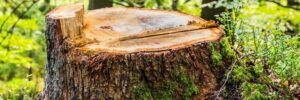
Sometimes. A small, recently planted tree may be straightened and staked within a day or two. A mature tree, however, that has shifted at the root plate is rarely salvageable, as the structural anchor is compromised, and it should be assessed by an arborist before the next storm.
Does homeowners insurance cover storm-damaged trees in Massachusetts?
Coverage varies by carrier and circumstances. Most policies cover damage caused by a fallen tree to a structure, but they usually don’t cover the cost of removing a tree that hasn’t fallen, even if it’s a clear hazard. Before you schedule work, check with your insurer.
What does root damage look like on a tree?
The most visible signs of root damage are:
- Cracks in the soil radiating from the trunk base
- Soil that looks raised or “fluffy” on the windward side
- Exposed roots on the opposite side
Any of these signs point to root plate movement and call for an assessment.
Should I worry about a tree that looks fine but is near my house?
Yes, proximity changes the risk equation. Minor warning signs on a tree within falling distance of your home or an outdoor play area should trigger an assessment. The cost of being wrong undoubtedly outweighs the cost of a site visit.
Have a Coastal Tree That Doesn’t Look Quite Right? Call Top Notch Tree!
Spring storms often expose problems that were already developing beneath the surface. Along the South Shore, saturated sandy soils, salt exposure, and strong coastal winds can leave trees stressed or structurally weakened even when they still look normal from the ground.
Our team is walking properties across Scituate, Duxbury, and the rest of the South Shore right now. If a tree on your property has shifted, leaned, or hasn’t looked right all season, now is the time to request a free quote. Call 781-412-1862 and we’ll come take a look.