
Mowing around tree stumps gets old fast. What starts as a minor inconvenience turns into something you’re constantly working around – trimming, maneuvering, and trying not to wreck your mower. At some point, most South Shore homeowners reach the same conclusion: it’s time to grind those stumps. The question is, how much will it cost?
Whether you’re dealing with a single leftover stump or clearing out several across your property, stump grinding costs can vary based on size, location, and a few other key factors.
Key Takeaways
- Small to medium stumps (12–24 inches) typically cost $200–$250 per stump in Massachusetts.
- Large stumps (24–30+ inches) usually range from $350–$500, with bigger stumps on the higher end.
- Grinding multiple stumps (5–8) often costs $500–$800 total, lowering the per-stump price.
- Stumps in hard-to-reach areas cost more than those near driveways due to accessibility challenges.
- Basic cleanup is usually included (grindings raked back into the hole), but full debris removal and disposal costs extra.
- Underground utilities require extra care, which can raise labor time and pricing.
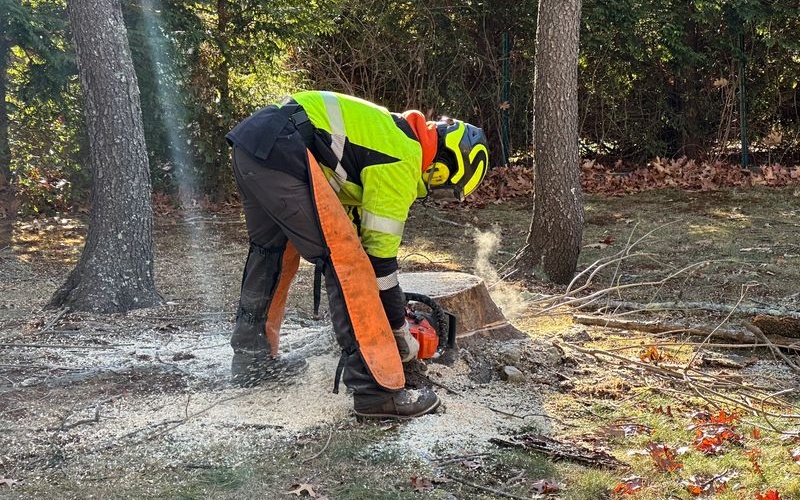
Cutting the stump closer to the ground before grinding makes the process more efficient and reduces strain on the grinding equipment.
How Much Does Stump Grinding Cost in Massachusetts?
Stump grinding costs in Massachusetts range from $200 to $500+ per stump, depending on size, with the final price also influenced by location, access, and how many stumps you need ground.
That pricing includes bringing professional grinding equipment to your property and grinding the stump 6–8 inches below grade, which is sufficient for lawn restoration, though replanting in the exact same spot is not usually recommended.
Small to Medium Stump (12-24 inches): $200-$350
A small to medium stump costs $200-$350 to grind, with most falling in the $200-$250 range. This category covers the majority of residential stumps we handle across Hanover, Pembroke, and other South Shore towns. It includes stumps from ornamental trees, smaller maples, dogwoods, and crabapples removed from landscaping beds.
A 12-inch stump from a young ornamental tree takes less time than a dense 24-inch oak stump, which pushes pricing toward the higher end of the range. The wood density and root structure also play a role, since hardwoods, like oak, require more grinding time than softer species.
Large Stump (24-30+ inches): $350-$500+
Large stumps from mature shade trees cost $350-$500+ to grind, depending on diameter and wood type. These are the stumps left behind from the towering pines and century-old oaks common on coastal properties in Scituate and Marshfield.
A 30-inch pine stump might cost $350-$400, while a massive 40-inch oak stump with dense wood and extensive root flare can exceed $500. The larger diameter means significantly more grinding time, and our equipment works harder cutting through the increased volume of wood. Stumps over 40 inches require special assessment since they’re beyond the standard residential size.
Multiple Stump Grinding (5-8 Stumps): $500-$800
Multiple stumps from the same property cost $500-$800 total when you’re grinding 5-8 stumps in the 12-24 inch size range. The per-stump cost drops significantly because we only charge one mobilization fee and can work efficiently moving from stump to stump.
The exact price depends on the stumps being relatively similar in size and reasonably accessible. If you have three small stumps clustered near your driveway and five large stumps scattered across your back acre, expect pricing on the higher end of the range.
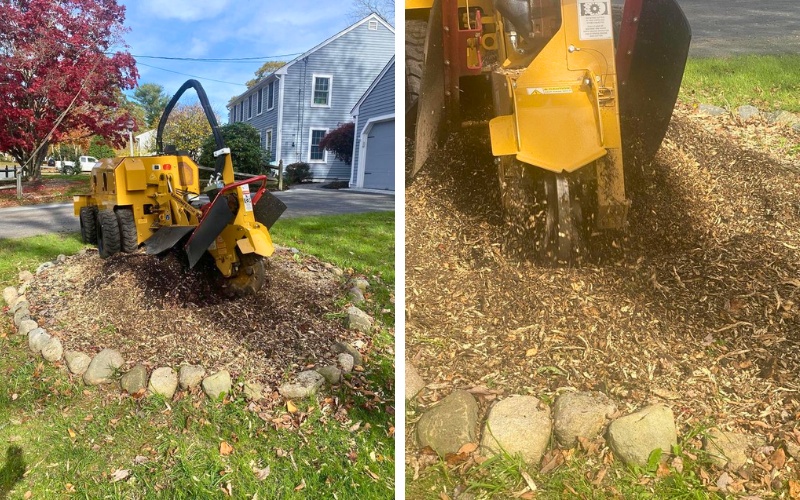
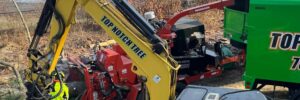
Our commercial-grade stump grinders efficiently reduce stumps to chips while minimizing damage to surrounding landscaping.
What 4 Factors Affect Stump Grinding Costs?
Beyond the stump’s diameter, several variables can affect the final cost of your stump grinding proposal. Understanding these factors and what makes stump grinding challenging helps explain why two 20-inch stumps might have different grinding costs.
1. Stump Location and Accessibility
A stump five feet from your driveway costs less to grind than one tucked in your back corner, requiring us to navigate through a 36-inch gate. Equipment access makes a massive difference in labor time and cost.
Stumps near driveways or open yard areas allow us to position the grinder easily and work efficiently. We can drive equipment right into place, set up quickly, and complete the job with minimal maneuvering.
But many South Shore properties – especially historic homes in Hingham and Cohasset – have narrow side yards, stone walls, and established landscaping that limit access. In these situations, we may need to use smaller or more specialized equipment and take extra care navigating tight spaces, which adds time to the job.
Steep slopes, limited entry points, or stumps surrounded by features that need to be protected can all increase labor time and cost. Coastal properties can add another layer of complexity, with tighter lot layouts and more extensive root systems requiring additional grinding effort.
2. Number of Stumps Being Removed
The first stump carries the bulk of the setup time, which is why a single stump typically costs $200–$250.
When you have multiple stumps, the cost per stump drops because we’re already on-site and can move efficiently from one to the next. Five stumps might cost $500–$600 total instead of $1,000+ if priced individually.
Stumps that are close together are the most efficient to grind, while those spread across a larger property may take more time – but you’ll still save compared to single-stump pricing.
3. Stump Grinding Debris Removal (Usually Extra)
Standard stump grinding includes grinding the stump below grade and raking the debris into a neat pile, but it typically does not include hauling away that debris. Many homeowners don’t realize this upfront, so we’re clear about what’s included in the base price.
Grinding produces debris that is a mixture of wood chips, dirt, and rocks all ground together. That means removing them requires additional equipment like a loader and truck, along with added labor and disposal fees.
Most homeowners choose to leave the material in place, use it to fill the hole, or move it elsewhere on the property. Professional removal is available for an additional cost if you prefer a fully clean finish.
4. Nearby Underground Utilities and Infrastructure
Stumps near underground utilities add time and cost to the grinding process because we need to work more carefully and methodically. When electric lines, gas pipes, cable, water lines, or buried infrastructure are nearby, we can’t just grind at full speed; we need to slow down significantly to avoid damaging anything underground.
Before we start any grinding work, we call Dig Safe to mark gas, electric, cable, and telephone lines. But we also need homeowners to mark private utilities that Dig Safe won’t flag, such as sprinkler systems, landscape lighting, and invisible dog fences.
When utilities are marked near the stump, our operator works more deliberately, taking smaller bites with the grinder and constantly checking the depth. That additional labor time increases the cost, but it’s necessary to avoid causing extensive damage or service disruption.
Frequently Asked Questions Stump Grinding Costs
Why doesn’t stump grinding include debris removal?
Debris removal requires different equipment (a loader and dump truck) plus disposal fees at transfer stations. Most homeowners prefer DIY options, like wheelbarrowing grindings to wooded areas or working with landscapers to incorporate them into lawn restoration, which keeps the base grinding cost affordable.
How deep do you grind stumps?
We grind stumps 6-8 inches below ground level as our standard depth, which is sufficient for lawn restoration and replanting. Deeper grinding is available upon request for additional cost, though roots beyond the grinding depth decompose naturally over time without causing problems.
What happens if you hit my sprinkler system during grinding?
Homeowners are responsible for marking underground sprinklers, landscape lighting, and invisible dog fences. We call Dig Safe for gas, electric, and cable lines, but private utilities aren’t included. Damage to unmarked systems is the homeowner’s responsibility, so deactivate and mark all underground systems before service.
Can you grind stumps in winter?
Yes, stump grinding is a year-round service in Massachusetts. Frozen ground can make access more difficult in some situations, but winter scheduling is often more flexible with better availability. The season has no impact on grinding quality or results.
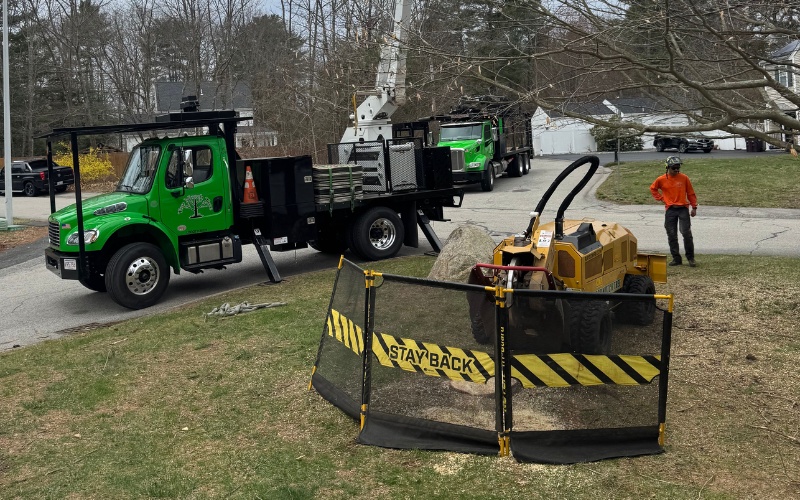
Multiple stumps on the same property allow us to work efficiently and pass mobilization cost savings on to you.
Get an Accurate Stump Grinding Quote from Top Notch Tree
Stump grinding costs vary based on your specific situation: the size and number of stumps, where they’re located on your property, and what you want done with the debris afterward. Now that you know the baseline pricing ranges and what factors push costs higher, the next step is to get an accurate quote with an on-site assessment.
The team at Top Notch Tree has been grinding stumps across the South Shore for years, so we have a pretty good sense of what goes into each job – and how to price it fairly. If you’re ready to get rid of a stump (or a few), we can take a look and give you a straightforward quote. Call us today at 781-412-1862 or request a quote online.