
How much does tree pruning cost? It’s an age-old question – and often the deciding factor in whether or not someone moves forward with service.
While tree height gives a rough starting point, pruning costs aren’t based on a simple formula. The true cost is driven by time, access, and how much selective work the tree actually needs. Because pruning is a labor-driven service, small details often have a bigger impact on pricing than homeowners expect.
Key Takeaways
- Tree pruning costs aren’t based on a simple formula, because time, access, and the amount of selective work required matter more than tree height alone.
- General price ranges can provide a starting point, but two trees of similar size can have very different pruning costs depending on site conditions and complexity.
- Factors like access, equipment needs, debris handling, tree species, and previous pruning all influence the final quote.
- The only way to get an accurate tree pruning price is through an on-site evaluation by a qualified arborist.
What Homeowners Should Know Before Looking at Tree Pruning Price Ranges
When homeowners ask about the cost of tree pruning, they’re often looking for a quick number to compare. While general price ranges can be helpful, they don’t tell the whole story.
Tree pruning isn’t priced by the branch or by the hour alone. It’s priced based on how long a trained crew will need to safely and properly work through the tree. Two trees of similar height can have very different costs depending on how accessible the tree is, whether its branches are well-spaced or problematic, and how much precise pruning is required to address those issues.
In many cases, careful pruning takes more time than removal. Removing a tree can be straightforward once equipment is in place, while pruning requires crews to move deliberately through the canopy, evaluating each cut to protect the tree’s long-term health.
With that in mind, the price ranges below provide a general starting point – not an exact quote.
What Tree Pruning Typically Costs Based on Tree Size
Tree size is often the starting point for discussing pruning costs, though it’s rarely the only factor that determines price. These ranges reflect typical pricing for basic pruning work under standard conditions.
Small Trees (Under 30 Feet): $300-$600
Small trees include young maples, ornamental trees, crabapples, and smaller shade trees common in newer developments throughout Hanover and Pembroke. At this size, we can typically handle the work with ground crews and basic equipment.
Most of the work we handle for these smaller trees includes:
- Removing low-hanging branches for lawn mower access
- Cleaning out dead wood and diseased branches
- Light crown shaping and structural pruning
- Basic cleanup and debris removal
These trees often don’t require bucket trucks or extensive equipment, which keeps costs manageable for homeowners.
Medium Trees (30-60 feet): $600-$1,200
This category covers most mature shade trees in established South Shore neighborhoods, such as the oaks, maples, and pines that give properties in Hingham and Cohasset their character. At this size, pruning often requires more detailed planning and may involve bucket truck access to safely reach higher branches.
Pruning work for medium-sized trees commonly includes:
- Removing larger dead or damaged branches
- Crown cleaning to improve overall tree health
- Selective structural pruning to reduce future risk
- Managing branch weight near homes, driveways, or walkways
Because crews are working higher in the canopy and handling heavier material, these jobs typically take more time and equipment than pruning smaller trees, which is reflected in the cost.
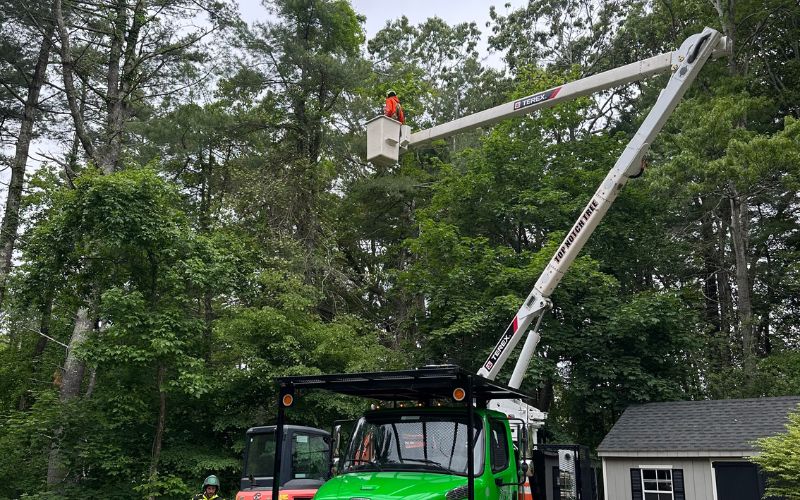
Large trees like these will cost more to prune due to the time and equipment we need to handle the job safely.
Large Trees (60+ feet): $1,200-$2,500+
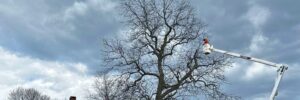
Large, mature trees – including historic oaks and tall pines commonly found on coastal properties in areas like Scituate and Duxbury – require the most involved level of pruning. Work at this size often involves climbing, advanced rigging, and careful coordination to safely remove heavy limbs without causing damage to nearby homes, structures, or landscaping.
Pruning work for large trees may include:
- Extensive deadwood removal throughout the upper canopy
- Crown reduction to address excessive weight and structural concerns
- Selective limb reduction near roofs, power lines, or other structures
- Managing large branch removal using controlled rigging techniques
Because these trees require more time in the canopy, specialized equipment, and a higher level of technical skill, pruning costs increase accordingly. For large, established trees that add significant value to a property, proper pruning is an investment in long-term safety and tree health.
What Affects Your Final Tree Pruning Quote?
While tree size provides a general starting point, several other factors can influence the final cost of pruning. These details help explain why two trees of similar height can still receive very different estimates – and why pruning prices aren’t one-size-fits-all.
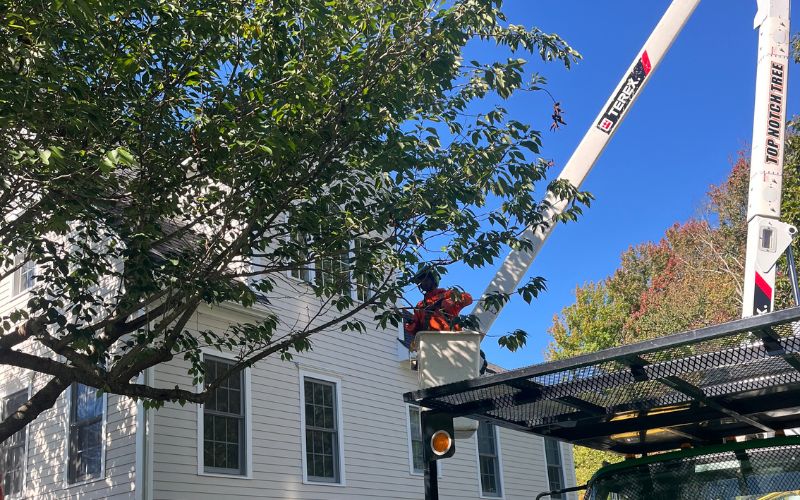
Working near structures requires a more careful approach to trimming, which can add to the costs of the service.
1. Tree Location and Access
Where your tree sits on your property dramatically impacts pricing. A tree in your open backyard costs less to prune than one squeezed between your house and your neighbor’s fence. Trees near power lines require coordination with utility companies, adding time and complexity.
Coastal properties in Marshfield and Scituate often present unique challenges, as wind exposure means we see more broken branches and salt damage, while tight lot layouts in these established neighborhoods make equipment positioning tricky.
2. Amount of Work and Time Required
Not all pruning jobs are created equal. Removing a few dead branches is straightforward, but correcting years of neglect or storm damage is another story entirely. Trees that haven’t been maintained develop co-dominant stems, included bark, and structural problems that take time to address properly.
The more selective cutting required (removing specific branches while preserving the tree’s natural shape), the longer the job takes. We’re not out there randomly cutting; every move we make is deliberate to improve the tree’s health and structure.
3. Equipment and Crew Requirements
Ground-level work with pole saws and hand tools costs less than bucket truck operations. Large trees over power lines or near structures often require our most advanced equipment to work safely.
South Shore properties with narrow driveways, stone walls, or mature landscaping require extra care during setup and takedown. Sometimes we need to hand-carry equipment to protect your lawn and gardens, which adds labor time but preserves your property.
4. Debris and Cleanup
Pruning costs also reflect the amount of debris generated and how it must be handled. Larger limbs, heavier wood, and higher volumes of material take more time to lower safely, process, and remove from the property.
In some cases, debris can be chipped on site and hauled away efficiently. In others, limited access or large material size requires additional handling, hauling, or disposal – all of which add time and labor to the job.
5. Tree Species, Condition, and Previous Care
Tree species and condition influence how complex pruning work will be. Dense hardwoods, like oak, take more time to cut and manage than softer species, while trees with brittle wood require added safety precautions during climbing.
Health issues matter as well. Trees affected by pests or disease often need heavier deadwood removal, increasing the amount of work involved. Past pruning practices can affect cost, too. Trees that were previously topped or lion’s tailed often need corrective pruning, which takes more time and care to address without causing further damage.
6. Timing and Urgency
When pruning is scheduled also affects cost. Planned maintenance during slower seasons is typically more cost-effective than emergency work following storms or high winds. When branches are damaged and pose an immediate risk, crews must respond quickly, which often comes with higher pricing. Routine maintenance pruning allows work to be completed efficiently and helps reduce the likelihood of urgent situations that require premium response.
7. Professional Expertise and Standards
Who performs the pruning matters. Work completed by an ISA Certified Arborist involves evaluating the tree, selecting appropriate pruning methods, and following ANSI A300 standards to protect long-term tree health. Professional pruning takes more time than simply removing branches. Each cut is intentional, based on tree structure, species, and future growth. That level of expertise is reflected in the final price – and helps prevent costly problems caused by improper pruning.
Why Tree Pruning Quotes Require an On-Site Evaluation
Tree pruning costs can’t be accurately determined without seeing the tree in person. While general price ranges are helpful for planning, small details that aren’t visible from photos or descriptions can significantly affect the final quote.
An on-site evaluation allows a Certified Arborist to assess the tree’s structure and condition, discuss homeowner goals, identify any safety concerns, and determine what type of pruning is appropriate. It also ensures recommendations and pricing are based on the actual work involved – not assumptions.
Frequently Asked Questions Tree Pruning Costs
Why do tree service prices vary so much between companies?
Tree service prices can vary widely because not all companies are providing the same level of training, protection, or professional standards. When comparing quotes, higher pricing often reflects what’s included in the service, such as:
- Liability and workers’ compensation insurance, which protects homeowners if an accident occurs on their property
- Certified Arborists who follow ANSI A300 pruning standards to protect long-term tree health
- Proper pruning techniques and experience, reducing the risk of permanent damage or tree failure caused by poor cuts
Why does pruning sometimes cost as much as tree removal?
Pruning requires precision work to carefully select which branches to remove while preserving tree health. Removal is often faster since we just cut it down and haul it away. Pruning takes longer because every cut matters for the tree’s future, and we use similar equipment but with much more detailed work.
What misconceptions do people have about tree pruning?
One of the most common misconceptions is that pruning is simple or only involves removing a few branches. In reality, proper pruning requires an understanding of tree biology, growth patterns, and species-specific responses to cutting.
Poor pruning decisions – such as removing too much material or making improper cuts – can create long-term structural problems and, in some cases, lead to decline that can’t be corrected. That’s why professional pruning focuses on selecting the right cuts, not just cutting more.
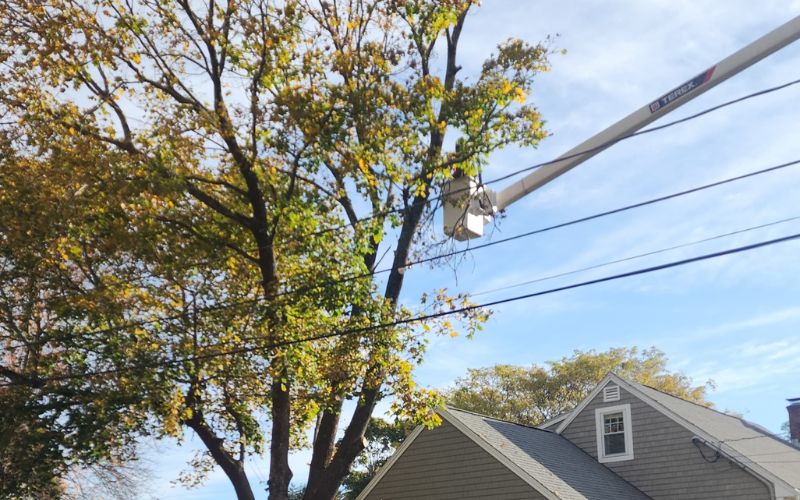
Top Notch Tree’s Certified Arborists safely perform pruning work near power lines, coordinating with utility companies when necessary to protect both trees and electrical infrastructure, though this adds to pruning costs.
Make the Right Tree Pruning Decision with Top Notch Tree
Tree pruning costs in Massachusetts vary based on tree size, complexity, and site conditions, but understanding what goes into pricing makes it easier to evaluate your options. While general ranges can provide a starting point, the only way to know what pruning will truly cost is to have the tree evaluated in person so recommendations and pricing reflect the work actually needed.
At Top Notch Tree, we approach pruning with care and intention. Every tree is treated individually, based on its needs and the homeowner’s goals – whether that means improving safety, enhancing appearance, or preserving something meaningful. Once a limb is removed, it can’t be put back, which is why thoughtful decisions matter. If you’re considering tree pruning, schedule an evaluation with our team for an honest assessment and a clear, fair quote.
Call us today at 781-412-1862 or request a quote online.